

Section 3
Media Decoding Sequence
Introduction
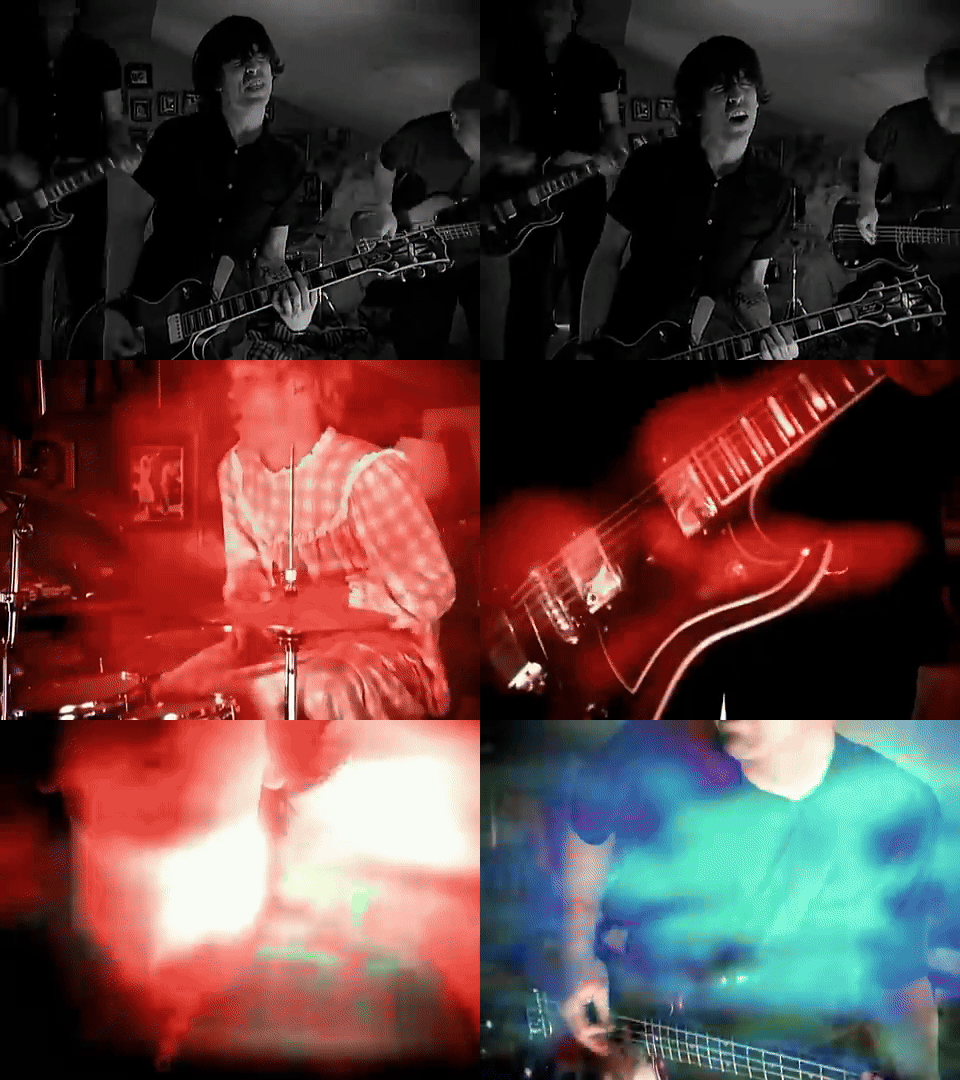
In this Musical Appreciation course at State University, you will explore the context and themes behind the music video “Everlong” by Foo Fighters. The music video debuted in 1997 and was directed by now-renowned French director Michel Gondry. This video explores dreams in multiple meanings. This media decoding will examine and guide how the music video explores those ideas and themes. Using a series of questions and hypothetical answers, this class will focus on specific sections of the video to guide the discussion.
Goal
This decoding aims to understand how Gondry demonstrates the balance between the “waking world” and dreams. While the video does a great job of differentiating between them, the dreams shown in the video have multiple meanings. Using the questions and framework by the National Association for Media Literacy Education (or NAMLE), the goal is to ask and answer questions to understand the framework behind “Everlong.”
Decoding Setup
In “Going Critical,” David Buckingham (Buckingham 2019) writes that “identifying the kinds of evidence that are needed, evaluating the most reliable sources, assessing the quality and relevance of evidence, and considering the extent to which it actually proves what is claimed for it.” Using NAMLE as a framework for this evaluation we’ll explore the ideas such as authorship (Who made this?), content (What are the meanings?), and responses (How does this make me feel?). This framework will shape the conversation around the music video.
Opening Questions
1. Who made this?
The video and song are performed by the Foo Fighters. The video itself was directed by Michel Gondry.
The Foo Fighters are an American rock band formed in 1994. Most often regarded as the band's signature song, "Everlong," it was released in 1997 on the album "The Colour and the Shape."
2. What stands out to you in the music video?
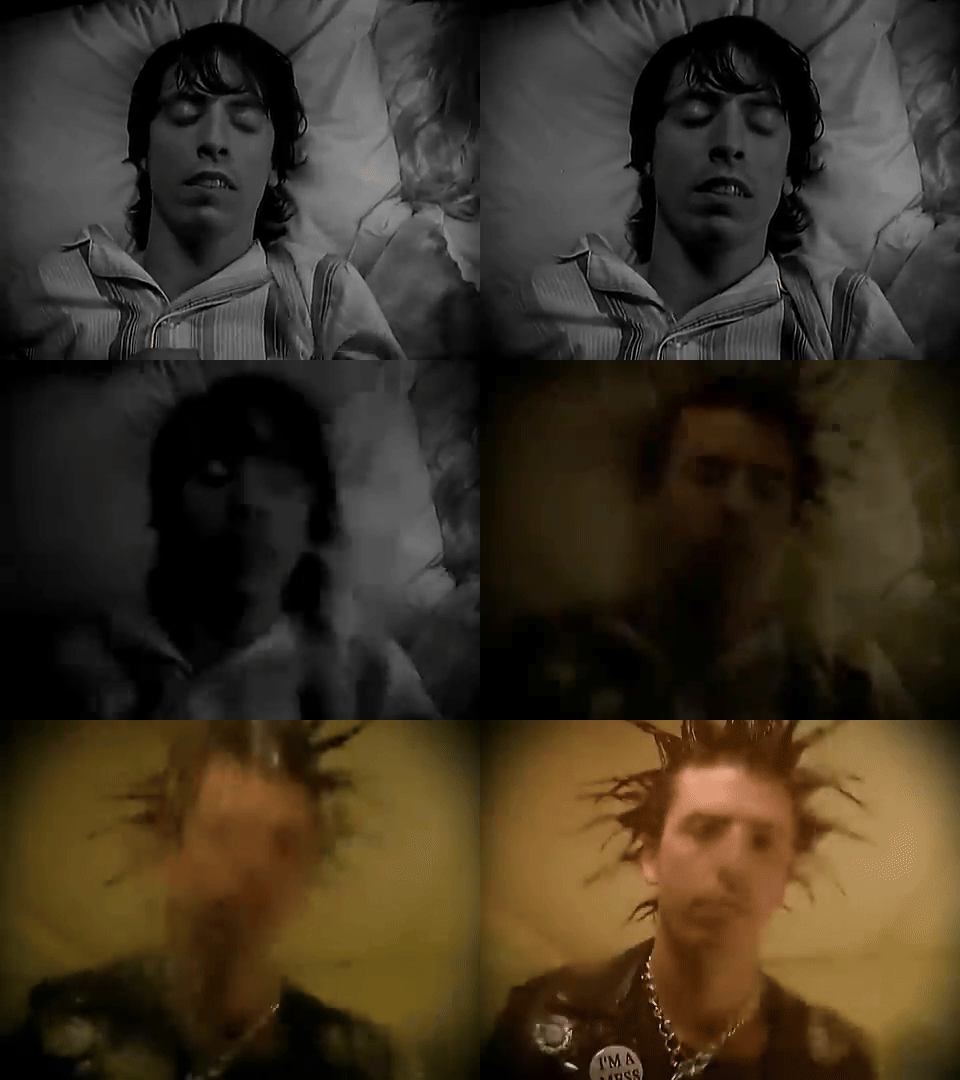
The video features the characters asleep and in their dreams. Each of the main characters' dreams is unique and offers simple visual narratives with underlying visual context. The use of black and white is a nice visual cue of what's occurring in the video.
Evidence Probes
1. How does the director's visual style affect the music video?
The director uses black and white to emphasize when the characters are dreaming. When transitioning into the characters' dreams, the video switches to color. This may represent the difference between "normal life" and how our dreams are often more vivid and adventurous.
2. What do you think is the video's purpose?
Much of the video is satirical, looking at dreams and multiple musical subcultures. The video could represent how the seemingly mild-mannered main characters see themselves in their dreams. The boyfriend sees himself as a punk rocker/hero and sees his girlfriend as a damsel in distress. The girlfriend could see herself solely as being in need of rescue and nothing else.
3. Do the perspective changes affect the flow or transitions in the video?
The director does a great job of handling the perspective changes between the main characters. The visual cues are used effectively to aid in this. Each main character receives ample time during the video to showcase their dreams. It's evident that the boyfriend seems to be main focus. This could be that the main character is played by the band's frontman. This may also explain why his character is seemingly the "white knight" of the video always rescuing the girlfriend.
4. What special effects are used? And how do they affect the video?
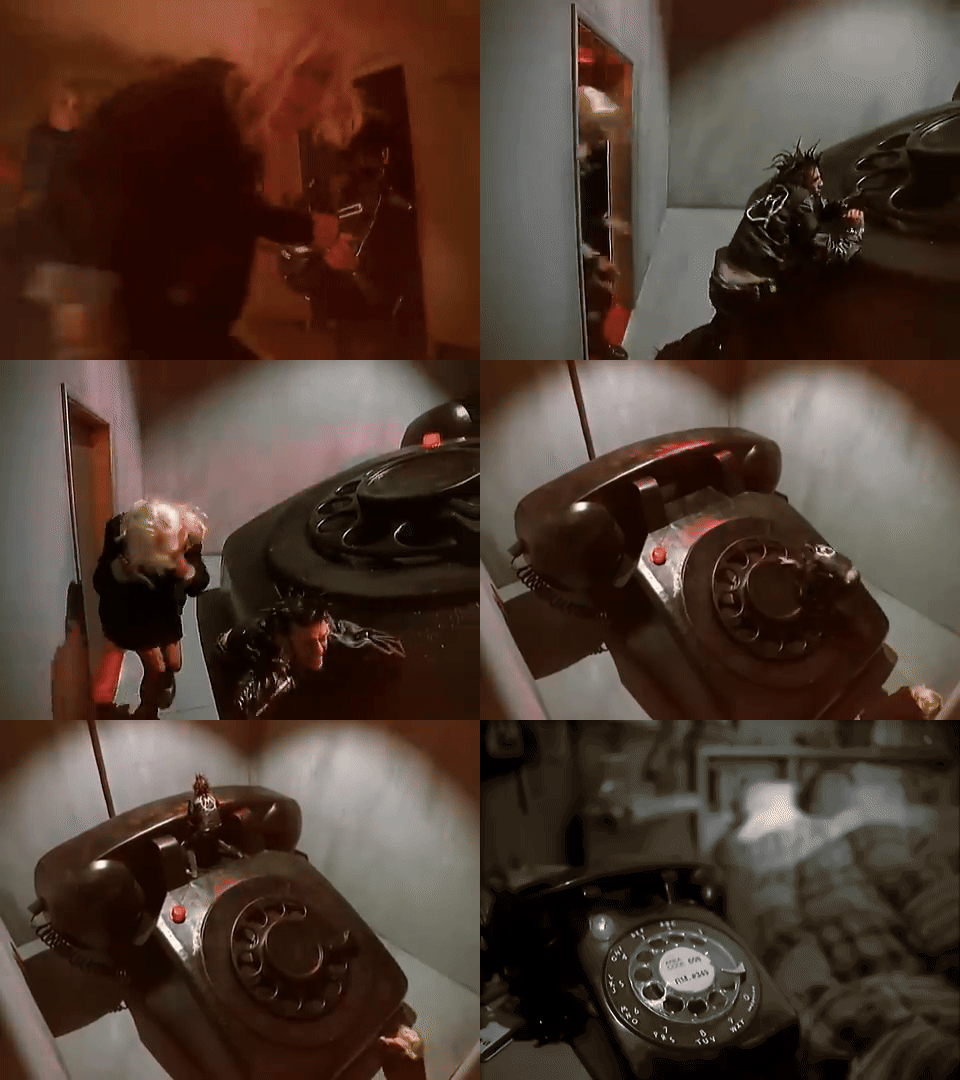
The director is known for his unique, "low-budget"-looking projects. His creative approach to this video is very clear. Even though a simpler approach was used, it was very effective. The video uses the director's simplistic approach to the fight scenes with the giant hand and log nunchucks. The most impressive set piece in the video was the huge phone around 1:54.
5. What was the conflict(s) in the video? And was it resolved?
There are several conflicts in the video. All of which involve the main characters and the pair of antagonists that follow them from the "waking world" and into their separate dreams. While it's not explained how the antagonists gain access to their dreams, they follow them into both main characters' dreams. In both dreams the boyfriend is able to dispatch both of the antagonists fairly easily. At the end of the video, there really is no conclusion because both the antagonists and main characters morph into the band to finish the last chorus.
Follow-up Questions
Did the techniques used in the video affect what you thought of it?
The techniques didn't necessarily positively or negatively influence my perception of the video. However, they did allow me to fully enjoy the song and music video itself. I can see how the song and video have become one of the most popular songs by the band.
Close Decoding
1. How might analyzing this music video help you think more critically about other forms of media?
This video shows a balance between the waking world and our dreams. It shows how our dreams can affect us when awake and vice versa. It also shows us that dreams are not permanent.
Conclusion
In closing, it's easy to see how "Everlong" is one of the Foo Fighters' most popular and endearing songs. The same can be said of music videos. Michel Gondry takes viewers through an adventure through dreams and shows us how they influence our waking hours. He also shows us how we are able to influence and interact with those dreams as well. The song and video are excellent examples of well-produced and presented media pieces.
Image citation: “Appalachian State University.” CollegeVine, 2025, www.collegevine.com/schools/appalachian-state-university. Accessed 6 Mar. 2025.