

"And I Wonder": A Media Literacy Analysis of Symbolism, Sound, and Storytelling of "Everlong" by Foo Fighters
Introduction
The music video for Everlong by Foo Fighters is a surreal and visually interesting piece of media that blends surrealism, horror, and comedy in one 4-minute and 52-second package. Directed by French filmmaker Michel Gondry, the video offers a unique storytelling experience that explores themes of love through a dreamlike narrative, all while keeping in line with Gondry’s “low budget” directing approach.
Through media literacy and critical analysis, Everlong offers a compelling case in using inventive and unconventional filmmaking style, one that’s made Michel Gondry famous. In this video, Gondry uses various visual metaphors, film techniques, and contextual references to deliver a striking piece of media complete with action, symbology, and emotion. Gondry’s distinctive cinematography and storytelling give us deeper insights on how media affects our waking and dreaming lives, how those influences affect our emotional states and perceptions, and how they engage the audience beyond just a song or music video itself.
This analysis will explore how the components of Everlong offer an interplay between both the musical and visual images while also reflecting on the influences on both Foo Fighters and Gondry. It will also investigate how the video does all this while keeping the audience intrigued and engaged.
Framework of the analysis
The symbolism of dreams
-
Concerning media literacy and its effects on the full video.
-
The representation of dreams throughout the video.
-
The waking world versus the dream world and how it’s represented.
-
How deep does the subconscious go?
-
Do dreams equal emotions here?
The narrative structure
-
Blurring the lines of what’s real
-
How the director immerses the viewer
Intertextuality and Everlong
-
How does Everlong promote critical thinking?
-
Cultural references in Everlong
The production of Everlong
-
Media’s influence on Everlong
-
How did Gondry’s childhood affect Everlong?
-
Gondry’s visual design
This analysis will be organized using the five core concepts of media literacy.
-
All media messages are ‘constructed.’
-
Media messages are constructed using a creative language with its own rules.
-
Different people experience the same media message differently.
-
Media have embedded values and points of view.
-
Most media messages are organized to gain profit and/or power.
By breaking down Everlong into these core concepts, I hope to detail the video’s message(s) and how they relate to the concepts. Doing a deep dive into each concept, I’ll ask questions and expound and detail each.
I'll also break the video down and document the major themes represented throughout. Using key supporting media, I'll tie Everlong in with the works by Michel Gondry, as well as other works related to the work of Foo Fighters.
1. All media messages are "constructed"
With his unique, often low-budget directing style, Michel Gondry has created a very thought-provoking piece of media that relates to so many other pieces of media. Everlong serves as a hybrid and genre-bending media piece. I will detail the video and Gondry's influences on the video's production and visual elements that set this video apart from others in and around this time. It's those elements and influences that have made this video a staple since its release in 1997.
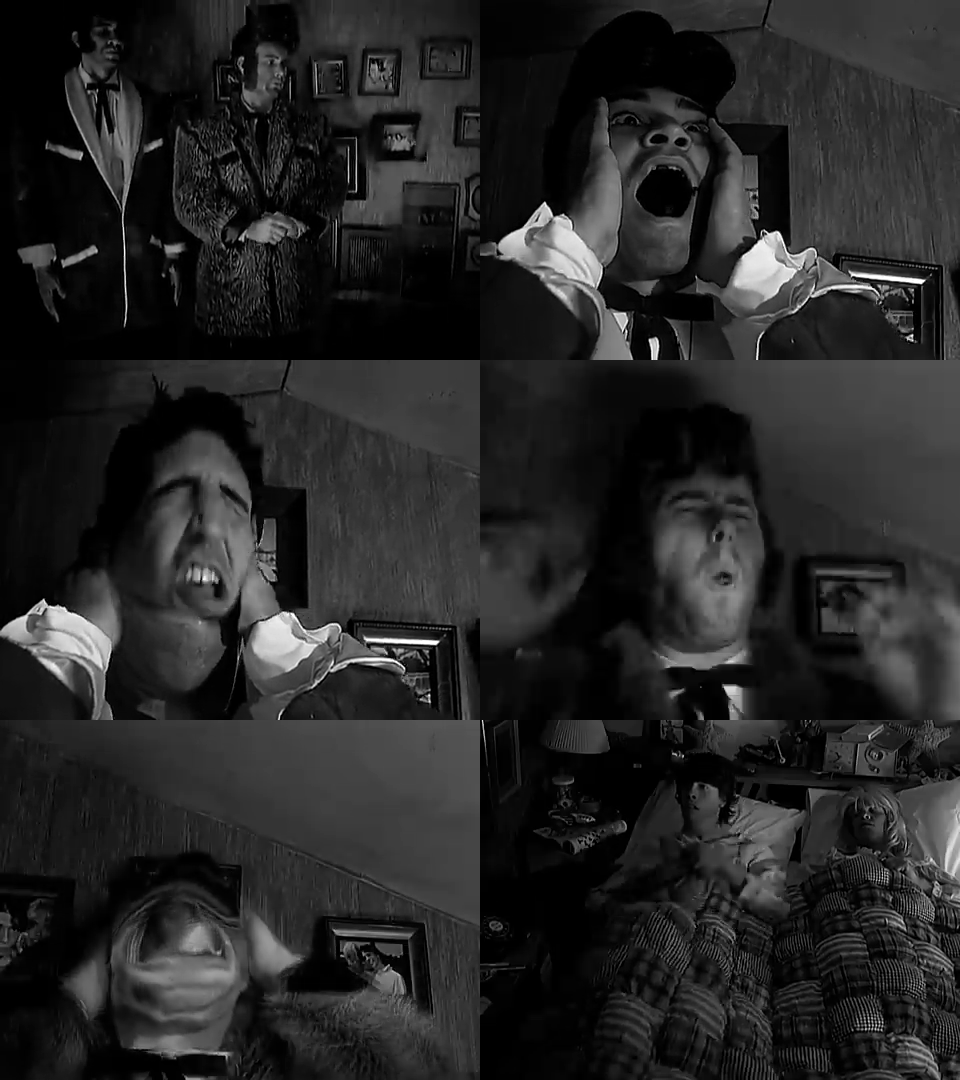
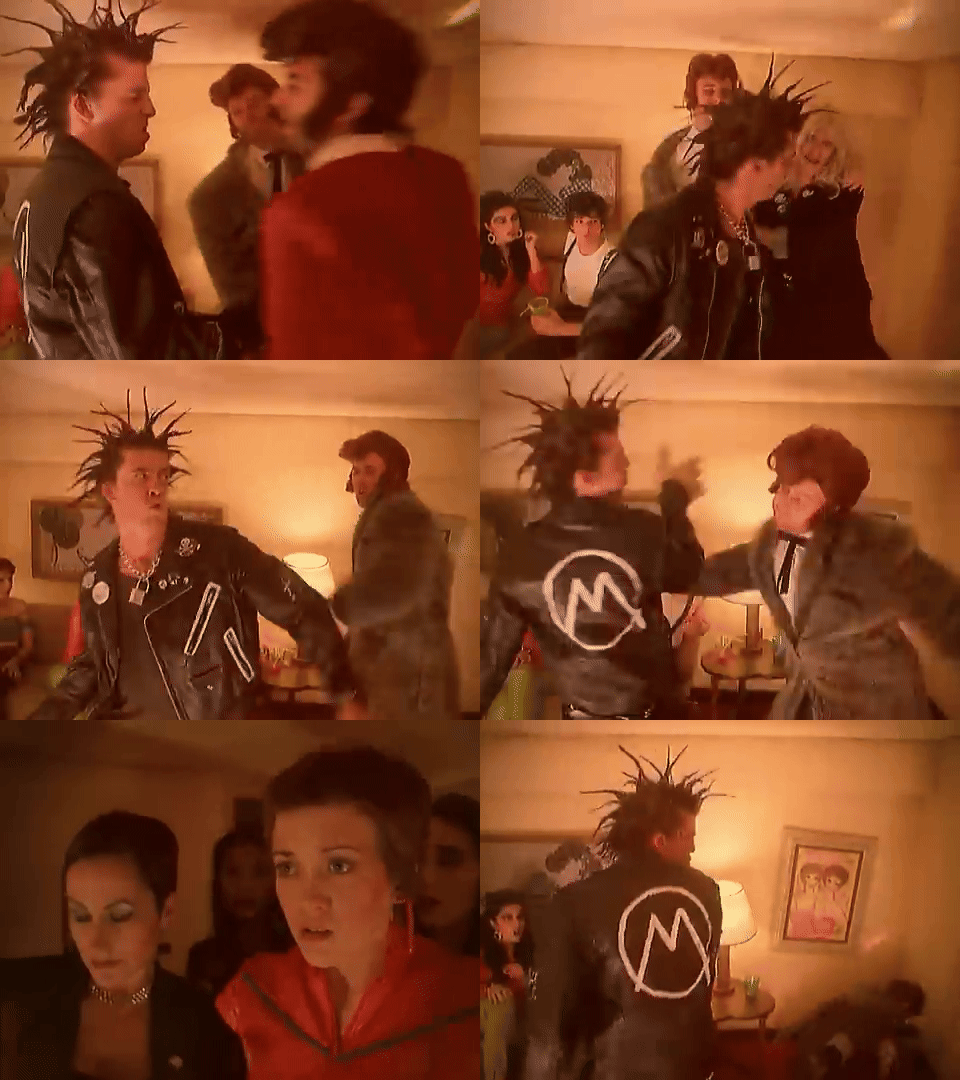
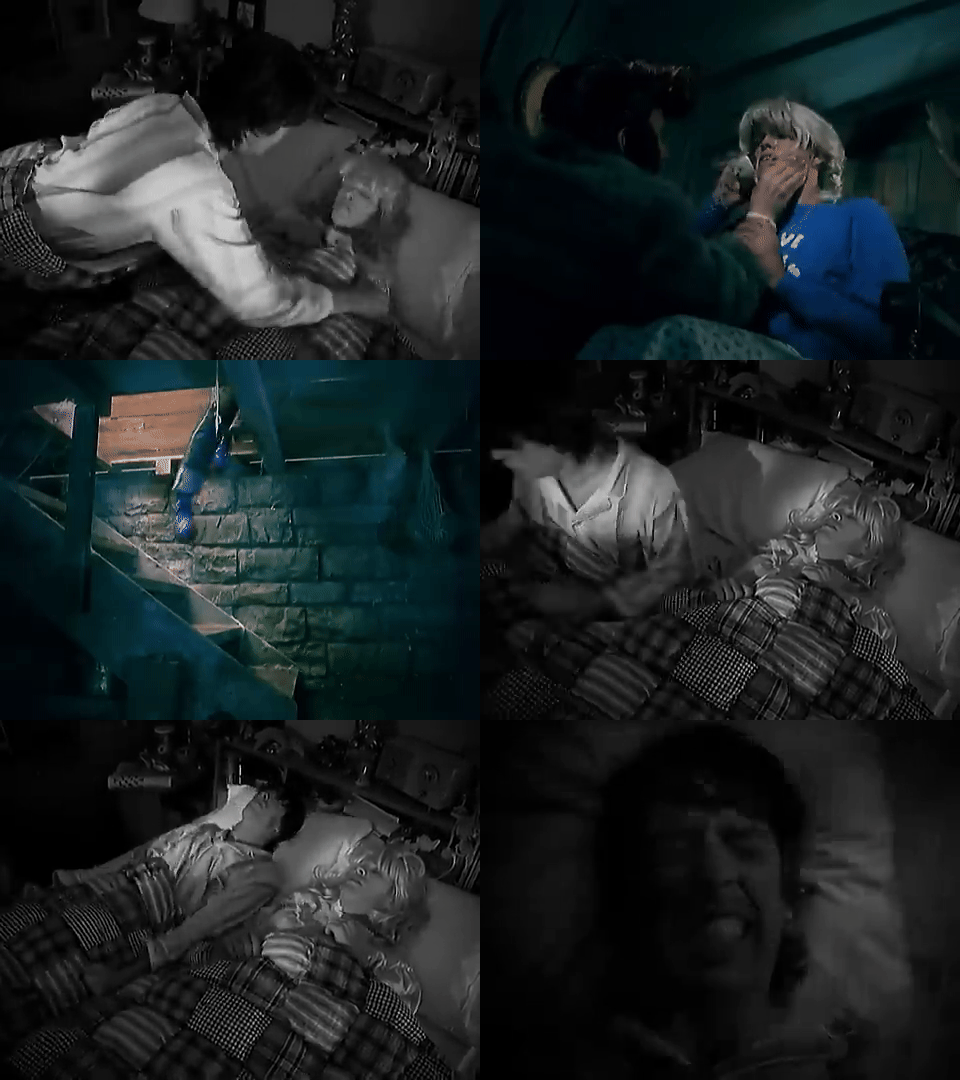
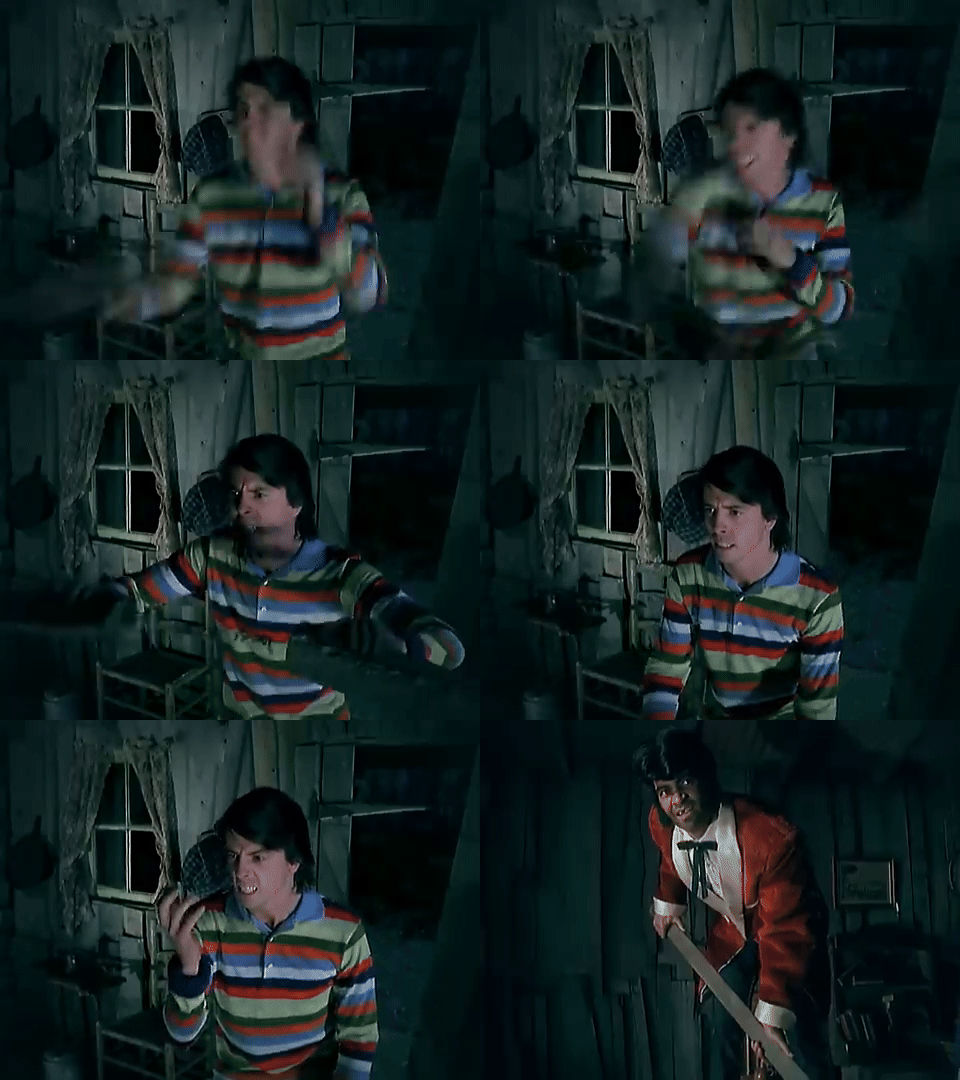
The music video for Everlong uses several dream sequences to explore a lot of topics. In this analysis I’ll explore the topics of the waking world vs. dreamscapes, the representation of dreams, the turbulence of love, the effects of timidity, and several other topics. The video explores the dreams of our two main characters. While in the waking world, they’re seemingly mild mannered. In their dreams we see them represented in several ways. The first representation we see of the couple is them dressed like Sid Vicious and Nancy Spurgen. The second we see them dressed similarly to characters from the “Evil Dead”. We see a couple sleeping peacefully while two men break into their home. What follows is an exploration into their separate dreams and how those dreams influence them while awake and vice versa.
The lead singer sings “Hello, I’ve waited here for you.” While the video and lyrics don’t necessarily correlate here, the first line of the song is very fitting for it being part of the first dream's introduction. Next our male protagonist walks past what should be a window but instead he sees a brick wall. This represents that we are stuck in his dream. There isn't a way out at the moment. It’s almost as if his subconscious is blocking any way of escape. He’s stuck and his only course of action is to just continue on in his dream.
3. Different people experience the same media message differently.
Were there specific reasons for using a B&W motif here?
In the "real world" of the characters, Gondry uses black and white as a visual motif. Gondry uses dream sequences in a very imaginative way throughout the music video for Everlong. The first 22 seconds of the video are in black and white. B&W imagery is used as an example of what the “waking world” is. The absence of color here could just be used as a simple way to differentiate the imagery of what’s real and what we’re dreaming.
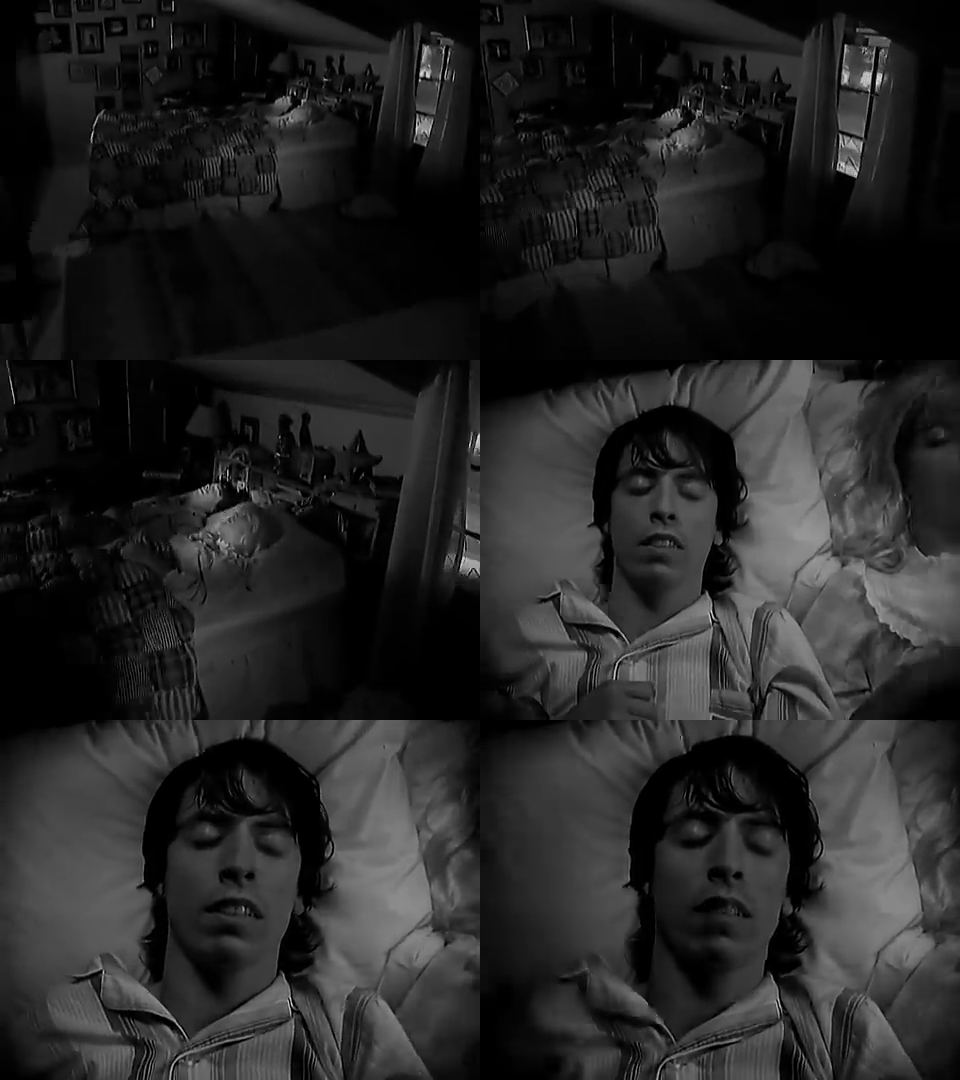
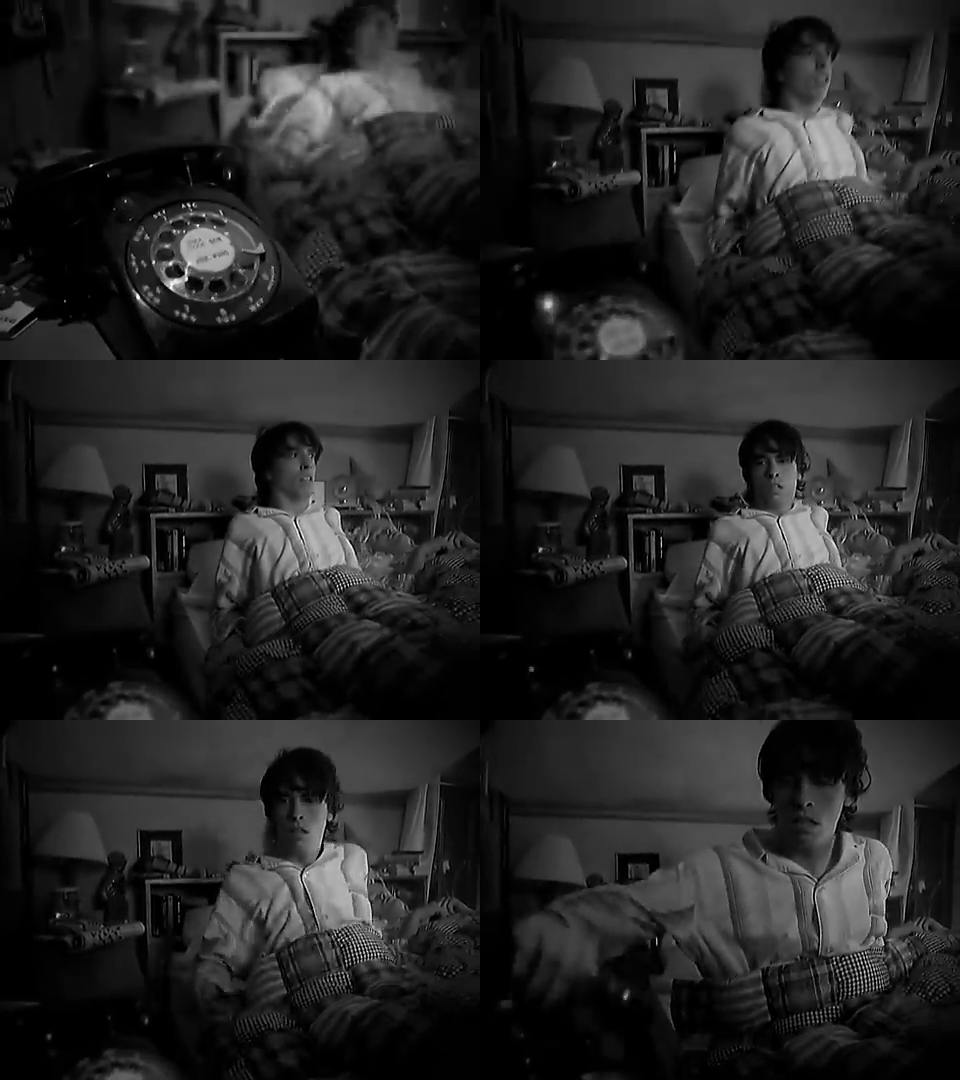
While Gondry has made no public comment on the reasoning, modern filmmaking uses black and white to segment narratives. On the blog "The Art of Using Black and White in Modern Cinema" (White 2024) Chris White writes: "In the realm of cinema, the strategic use of black and white doesn't merely serve aesthetic purposes; it plays a pivotal role in crafting and segmenting narratives, distinguishing between different realms, time periods, or emotional landscapes."


2. Media messages are constructed using a creative language with its own rules.
Tying in with CML's "Five Key Questions of Media Literacy" (CML 2005) we see more about the idea of constructedness. The idea of constructedness see and recognizes how something is built. At its core, constructedness represents the idea that all media is created and shaped by the work and choices of the creators. It's the framework and architecture of the message itself. It reflects the choices made to form the plan for media. The idea of authorship, especially regarding media literacy, is one of creation and of choice. One could argue that constructedness and choice are one in the same because it takes choice to create something.
The rules of "Everlong" are very simple. It's essentially a sleep-dream-wake-repeat cycle. Gondry does a great job establishing a demarcation between the parts of the cycle during the video. As described previously, the music video's visual cues easily make the parts of the cycle evident.


Sleep
Dream
Awake


The video jumps back and forth between dreams and the waking world several times throughout the video as a way to indicate which of our main characters' dreams we're in.
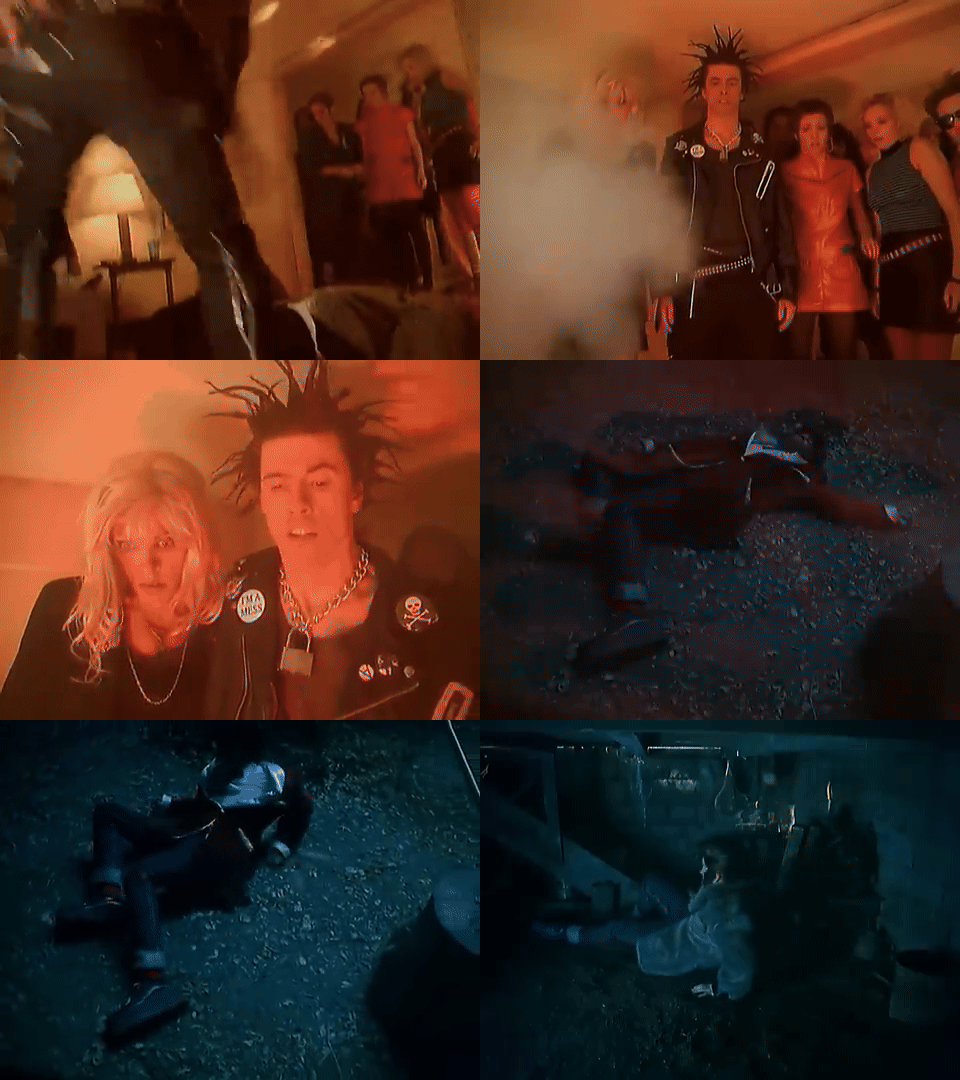
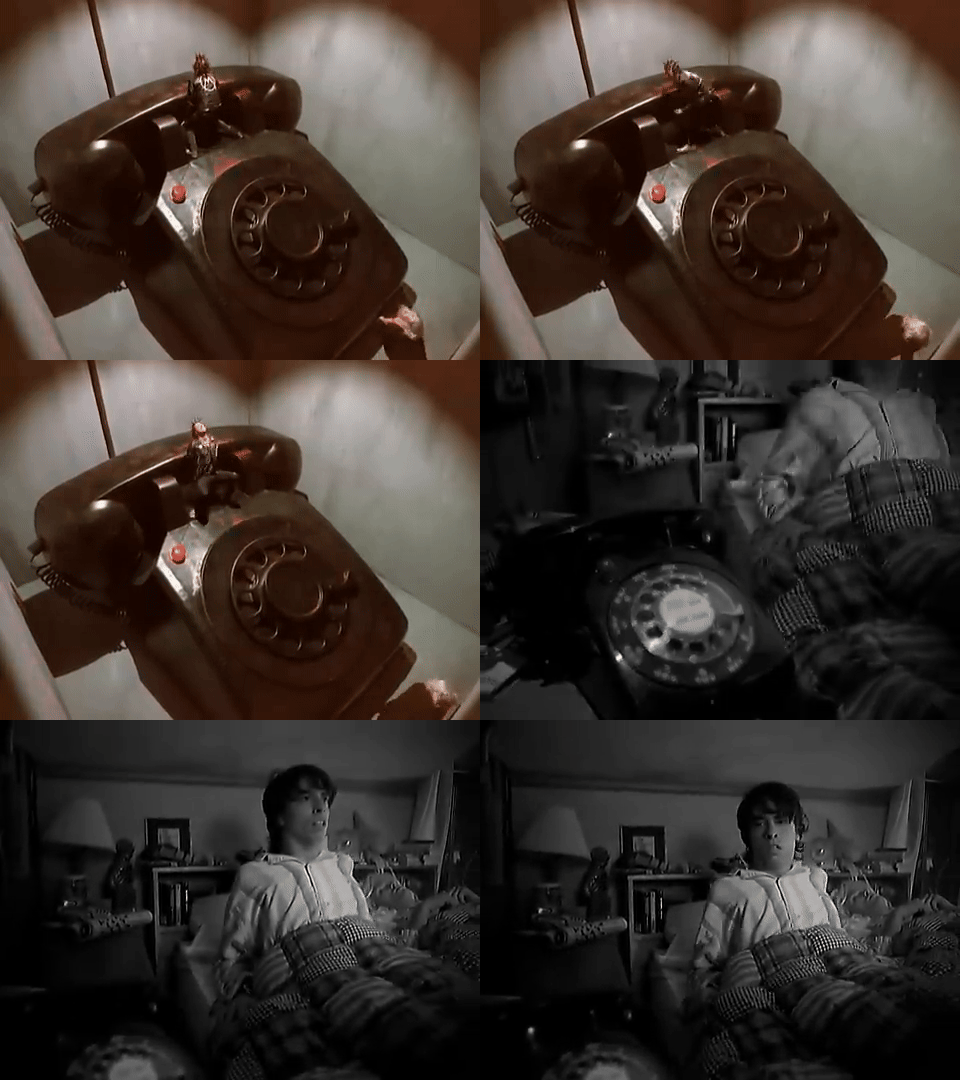
Until the girlfriend's dream around the 1-minute mark, their dreams had been separate. On the left, we see the boyfriend's dream where he dispatches the antagonists. As they burn away into nothing, they are then "born" in the girlfriend's dream. On the right, I believe the phone represents the boyfriend's subconscious, which is trying to wake him up to fall back asleep to aid in his girlfriend's dream. Gondry shifts back into the sleep-dream-wake cycle here as we fall deeper into our protagonists' dreams.
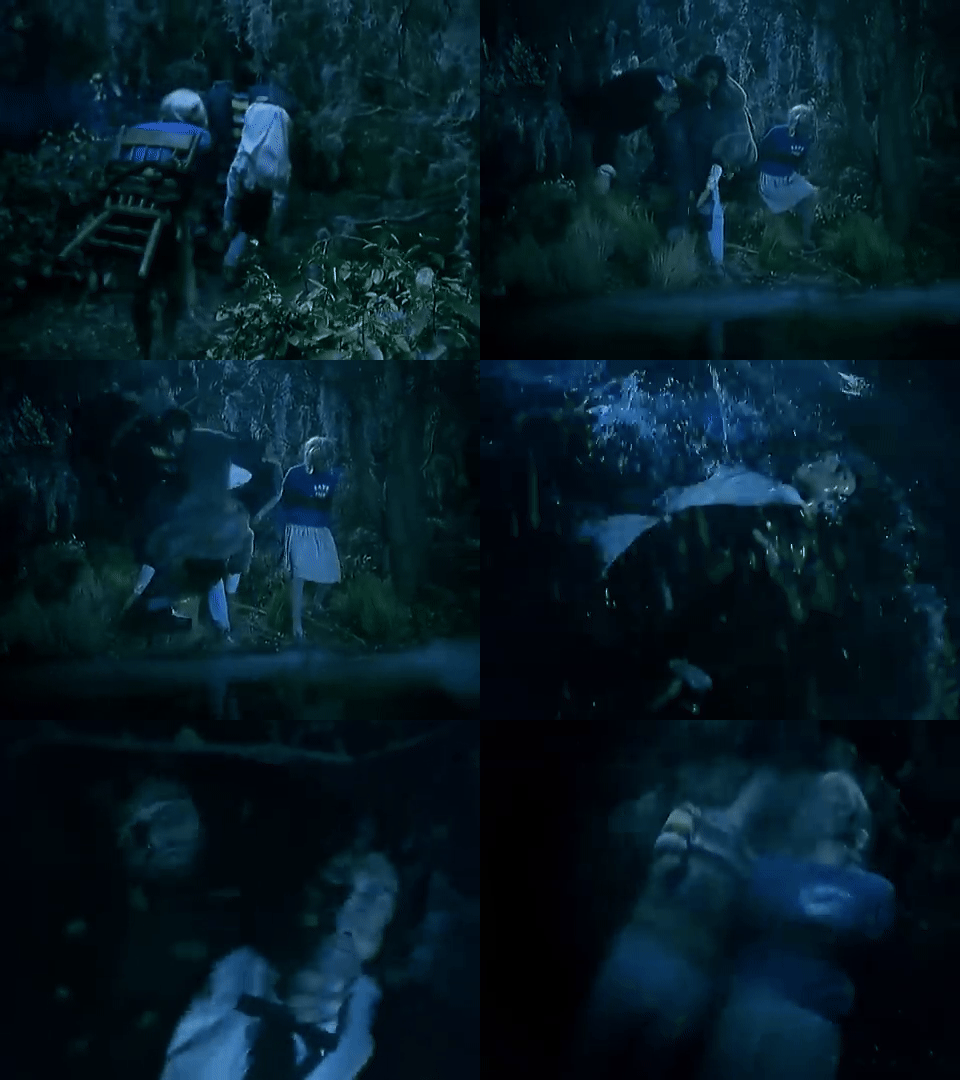
Towards the end of the video, we see the antagonists defeated. The villains are dispatched similarly to the water washing over the lens to indicate the transition in and out of dreams. With one final wash of water, the dreams of our protagonists are over, and the scene shifts back to our sleeping characters.
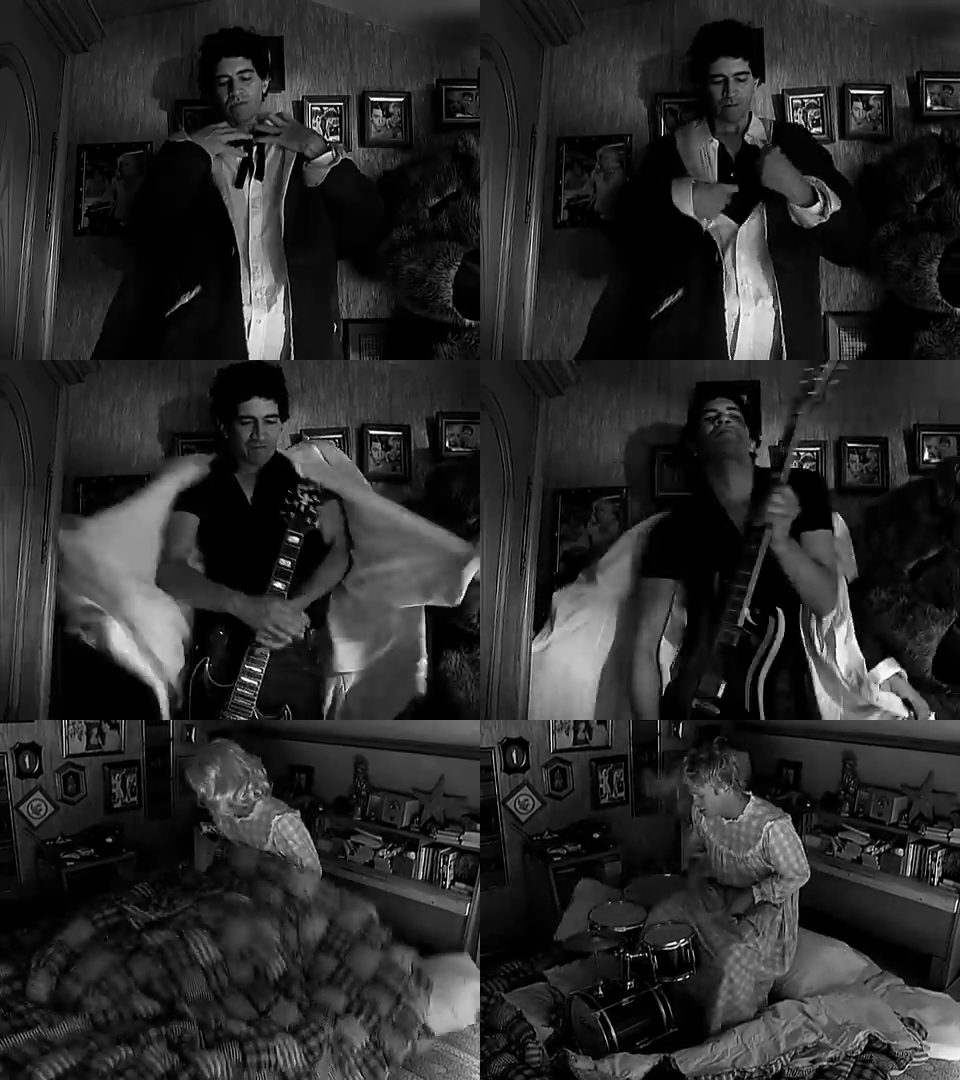
One last final transition here is the transformation of both sets of our antagonists and protagonists into the band itself. Using some creative tearaways, band members come out of the villains. The girlfriend sits up in bed and we see the sheets torn away to reveal a drumset. The boyfriend then reappears as the lead singer. All in all it's an incredibly creative way to end the video.
With the antagonists essentially phasing from dream to dream, two questions popped into my mind:
-
Are they even real?
-
If they aren't, are they part of our protagonists' subconscious?
CML asks, "How might different people understand this message differently than me?" While I may see the video and ask the two questions from above, others may not even think of it that way. In Section 4: Critical Creativity, I write about how misinformation affects us. Could the antagonists be constructs of our protagonists' dreams? If so, why are they shown outside their dreams at the beginning of the video? If they are real, how do they get into our main characters' dreams? Again, those are questions someone else may not even think about. Referring back to the section above this, we see the antagonists in both black and white and color. This would indicate that they are real and can somehow access the protagonists' dreams.
CML says (CML 2005) “What do you notice. . .?” is one of the most important questions to ask in the
media literacy classroom. And, of course, all answers are acceptable because different people notice different things." It's one of the most important questions because evaluating those noticeable things helps us see what's behind the message. It helps us see the meaning(s) at the core of the message. This selection also goes on to say that all answers are valid because, much like the Universal Design of Learning (or UDL), people bring in and offer different perspectives. What's important is that we make those perspectives known because they shape our shared learning experience(s). Our views are as varied as the media being presented. These unique perspectives are influenced by everything in our lives up to that point.
4. Media have embedded values and points of view.
CML (CML 2005) states, "All media carry subtle messages about who and what is important." These messages and values are embedded in the message itself. For "Everlong", those messages are most often touch on love and entanglement.
Love: We first meet our protagonists while sleeping peacefully in bed. Then as we focus on their dreams we see the lengths the boyfriend will go to defend and save his love. We see this happen several times during the video itself. The first and last time we see the boyfriend's hand grow to an enormous size to fight off their attackers. In the middle of the video we see the boyfriend force himself to sleep to be with his girlfriend. Each instance we see this mild-mannered man go to great lengths to aid his love.
Entanglement: This idea would explain how our protagonists are able to show up and interact in each other's dreams. As with quantum entanglement, no matter how far apart they are they will always come back together. In terms of media literacy, our protagonists' entanglement simply means they are not isolated and are a part of a much large picture. Much of Gondry's work has dealt with this idea. Prior to this video, Gondry had directed about 46 music videos. While "Everlong" was fairly early in his career, he went on to direct films such as "Eternal Sunshine of the Spotless Mind" and "The Science of Sleep." Both of those films directly used the idea of entanglement as a huge piece of their narratives.
5. Most media messages are organized to gain profit and/or power.
CML (CML 2005) states that "the basic content motives of informing, persuading or entertaining." For "Everlong", that is very accurate. As the second single off their second album, "Everlong" reached number 3 on the Billboard Alternative Song chart. The single ended up being a 2x platinum release selling over 200 million copies. The album, "The Colour and the Shape" also sold 2.3 million copies making it the band's first Platinum release.
In the music industry "Everlong" was considered an incredibly successful release. Both the single and album were platinum releases.
Michel Gondry has produced and directed many more music videos since this video. He also has an extensive list of directing credits for advertisements and feature films as well.

Image sourced from: https://en.wikipedia.org/wiki/Everlong#Charts
Conclusion
In "Going Critical", David Buckingham writes, "viewing critical thinking as a reflective process by questioning one’s own perceptions. (Buckingham 2019)" Thinking critically about a media piece like "Everlong" requires a rigorous approach to the evaluation. Buckingham also writes, "Critical thinking involves questioning easy assumptions and considering alternative ways of looking at a problem. This often means challenging the way an issue is framed, or the terms in which it is defined; it requires us to look at what is included and excluded from the frame, and what the consequences of this might be. (Buckingham 2019)"
When I chose "Everlong" for my media analysis, I knew my work was cut out for me. Diving into the decoding sequence and the bulk of my analysis, I gained a deeper appreciation of the work of Michel Gondry and the Foo Fighters. The dive into dreams, their meanings, how those dreams influence us when we're awake, and how what we do consciously affects our dreams. The outside influences and biases can affect how and what we dream of and act out. This requires us to view and approach the things we see and experience with a critical mindset. When thinking critically about any media piece we must take in all aspects of the piece to fully understand it. While we may not fully breakdown or understand every aspect of a piece, we can do what we're able to to being the process.